
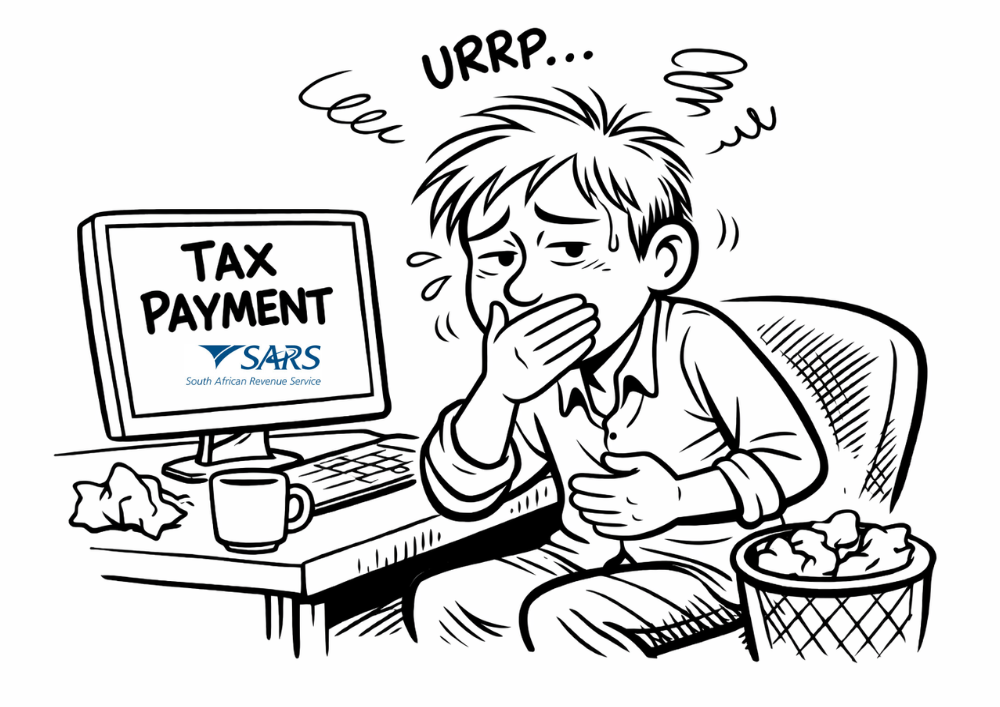
How to plan your tax payments without feeling sick
“I think I’m going to be sick”.
A business owner told me after she paid her provisional tax.
She had done everything correctly. Saved. Paid on time. And still felt sick.
It was a lot of money, her hard-earned money. Fueled with late nights, coffee and persistence.
So, be honest.
When the last provisional tax payment went through, did you feel that knot in your stomach
The one where you think, we knew this was coming… so why does it still feel like a shock
Provisional tax arrives loudly, even though it is scheduled months in advance. And when it hits, it can squeeze cash flow hard.
The truth is, tax pressure is usually not a tax problem. It is a cash flow planning problem.
In this newsletter, I’m going to show you how to plan for all those pesky cash flow drains during the year.
Tax planning is really cash planning
For a small business, effective tax planning is not about complicated strategies. It is about making sure the money is already set aside before the deadline arrives.
The easiest way to do this is to treat tax like it is not yours.
That means:
- Open a separate tax savings account.
- Move tax money there consistently.
- Track what portion belongs to which tax.
When you do this, your bank balance stops lying to you. You know what is available for operations and what is already spoken for.
Let’s break it down by tax type.
Payroll taxes happen every month
If you run payroll, you already know the drill. PAYE, UIF, SDL. They are due monthly.
You should know how much is owed. If not ask your accountant and find out.
Make sure this amount is sitting in your savings account.
When the payment is due, transfer this out and top it up as soon as the funds become available.
This avoids penalties and avoids last minute panic if there are banking delays.
VAT comes in cycles
If you are VAT registered, you either pay every two months or monthly depending on your category.
When you invoice clients and collect VAT, that money is not income. It is collected on behalf of SARS.
Instead of waiting until submission time and hoping the cash is there, move a portion of VAT collected into your tax account as sales happen.
A good way to check this is to see how much you owe, is to keep an eye on your VAT control account.
If you are due a VAT refund, treat it as planned cash flow. Not a bonus. You can leave it in your tax reserve to strengthen your next VAT or provisional tax payment.
Provisional tax needs forward thinking
This is where most of the pressure happens.
The first provisional payment can often be based on last year’s assessed tax as a conservative starting point.
The second provisional payment needs a more accurate estimate. That is where monthly management accounts and a simple rolling profit tracker make a big difference.
Instead of scrambling in the final month, calculate what you expect to owe and divide it across the remaining months. Set aside a fixed monthly amount into your tax account.
Then in the final month, refine the estimate and either top up or release any excess.
This removes the shock factor.
Other compliance costs still matter
Annual returns and similar compliance costs are usually smaller, but they should still sit in your forecast. Missed deadlines cost money and credibility.
Bring it all into one view
Every tax payment should be built into your cash flow forecast.
- Monthly payroll taxes.
- VAT cycles.
- Provisional tax periods.
- Annual compliance fees.
When you can see the pressure months in advance, you can adjust early. Delay non essential spending. Improve collections. Tighten payment terms. Avoid the last minute scramble.
This is how you take control.
Upcoming workshop
Here is the link to the waitlist for my upcoming workshop where we will work through it together: https://forms.gle/yELGm8LWCGvJAFkS8
What you’ll get:
- Tax planner for provisional tax, VAT, Payroll taxes
- Step by step instructions on how to complete them
- Complete cash flow plan that you can use to manage your next tax payment
If the last provisional tax payment felt heavier than it should have, this is your opportunity to fix it before the next one.
Join me for the workshop, and let’s make sure, that you don’t have issues again.
Future you will thank you.
If you need help with financial planning, accounting, or would like more details about the workshop, contact me. I would be happy to assist.